
Long-Form Conversations

Articles & Interviews

In-depth interviews conducted and written by Jean with practitioners whose lives have been transformed by the Transcendental Meditation technique.

Lindsey Creegan, Special Educator

The TM Technique as an Essential Tool for Special Educators

An interview with Lindsey Creegan — Special Educator, Syosset Central School District, New York

Interview conducted and written by Jean Tobin

Lindsey Creegan is a Special Educator in the Syosset, New York Central School District. A special education teacher provides support to students with disabilities in accessing the general education curriculum. They collaborate with a team to develop Individualized Education Programs, implement these plans with individualized instruction, and monitor student progress. They work with students who have a range of disabilities, including learning, cognitive, emotional, and physical. We are grateful that Lindsey was able to spare some of her precious time to answer our questions.

Q: Please let us know how you heard about the Transcendental Meditation technique.

"I first learned about the Transcendental Meditation (TM) technique through a colleague in my current school district. We work closely as part of the special education team and often rely on one another for emotional and professional support. After a particularly challenging and emotionally charged situation with a student and her family, she candidly shared how TM had helped her manage the stress that naturally comes with our roles. That conversation was a turning point for me and sparked my journey into TM."

Q: Please describe what your experience was of teaching special needs children before and after you learned the TM technique.

"Teaching students with special needs is incredibly rewarding, but it also comes with unique challenges — many of which are high-stakes and emotionally demanding. These challenges can sometimes involve contentious meetings, intense advocacy work, and the pressure of ensuring that every student receives the services and support they deserve. I am deeply passionate about my students and my work, but over time, the constant pressure began to affect my well-being. I experienced anxiety, occasional panic attacks, and disrupted sleep, among other stress-related symptoms."

"After learning TM, I began practicing it twice daily — once in the morning before school, and once in the evening after work. The results were profound. TM gave me the ability to reset and let go of stress in a healthy, consistent way. The intrusive thoughts, overthinking, and mental exhaustion that used to linger after work began to quiet down. I now navigate my day with greater clarity, patience, and emotional resilience. I no longer feel as reactive; instead, I feel grounded and present — qualities that are essential when working with children who need you to show up at your best every day."

Q: Please explain how your personal life outside of work has changed since starting the TM technique.

"Outside of work, I've noticed a remarkable shift in my personal relationships. I'm more present — with my family, friends, and even in day-to-day experiences. I used to carry the weight of work-related stress with me everywhere, which made it difficult to truly unwind or engage deeply in my personal life. TM has helped me create a healthy boundary between work and home. I now approach life with more ease and joy, allowing me to experience more meaningful connections with the people I love. My overall quality of life has improved significantly."

"Importantly, the benefits of TM aren't limited to the moments right after meditation — I've found that they carry through the entire day. I feel more emotionally regulated, focused, and better equipped to enjoy my time outside of work."

Q: Were you practicing any meditation technique before TM? If so, how does the experience of TM compare, during and outside of meditation?

"Before TM, I occasionally listened to frequency music or guided meditations to help calm my mind. While those tools offered some momentary relief, they never fully helped me access the kind of deep rest and mental clarity that TM provides. TM is unique in that it's completely effortless, yet profoundly effective. The simplicity of the practice — just 20 minutes twice a day — creates such powerful benefits. From the moment I began practicing TM, I felt a noticeable shift. The health benefits are well-documented, and I personally experienced more consistent energy, better sleep, reduced anxiety, and a much healthier overall outlook. Years later, I can confidently say that TM has become a lifelong tool for balance and well-being."

Q: Interacting with the parents of special needs children is another big part of your career. How has TM helped in this regard?

"Communication with parents is a core aspect of my role, and these conversations can often be emotionally charged or delicate, especially when discussing a child's challenges or services. Since practicing TM, I've noticed that I am more composed and compassionate in these interactions. I'm able to listen more deeply, respond with empathy, and stay calm even in tense or emotional meetings. TM has strengthened my ability to advocate effectively while maintaining grace and understanding — a balance that is crucial when supporting families of children with special needs."

Q: We would love to collaborate with anyone who wants to let other special needs teachers know about the TM program on social media. Do you have any ideas for us?

"Yes, absolutely. There are many active online communities where special education professionals connect and share resources — Facebook groups, Reddit threads, teacher forums, and Instagram pages dedicated to SPED advocacy and wellness. These platforms could be excellent avenues to introduce the benefits of TM to educators, especially given the high stress levels often associated with our field. As someone who has personally benefited from TM, I would be happy to help get the word out within these spaces and share how this practice has positively impacted my life and career."
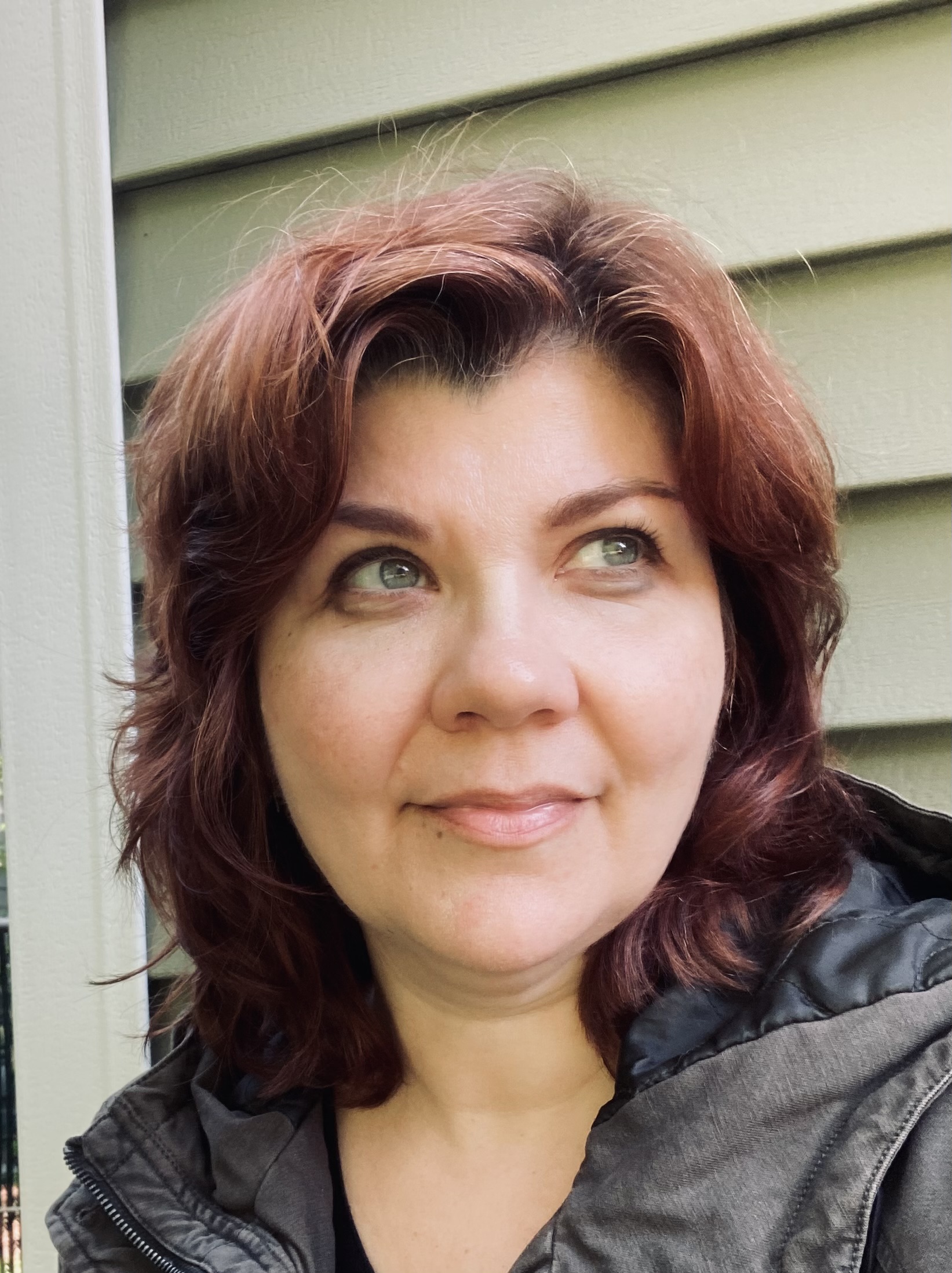
Dr. Anne-Marie Lepore, Licensed Psychologist

A Psychologist Talks About How TM Differs from Mindfulness

An interview with Dr. Anne-Marie Lepore — Licensed Psychologist & Neuropsychologist, New York

Interview conducted and written by Jean Tobin

Anne-Marie Lepore, PhD, is a New York State licensed psychologist and neuropsychologist who specializes in treating people with neurological conditions and in trauma-informed therapy. She is also a professional coach for "helping professionals," assisting them in balancing their self-care to achieve their personal goals and to help others in her practice.

Q: What benefits have you experienced as a result of regularly practicing the Transcendental Meditation technique?

"I have had this understanding for a long time that my best life is not necessarily something different from what it is now — that when you can stop and appreciate what is right here, you are living your best life. It used to be a struggle to practice this. Since TM, this comes quite naturally. I have to tell you I cannot recall a time when I so enjoyed and loved the crispness in the air that comes with autumn, listening to birds in the morning when I take my dog out for a walk, or hearing the crickets when I walk in the evening. I used to eat meals almost without tasting them, going through a list of things I had to get done. Now, I savor what I eat. Things get done in good time. Based on my Apple watch, it looks like my resting heart rate has come down too."

"For most of my adult life, I have worked excessively, never really taking the time to nurture myself and my relationships or even take care of my physical space. The desire to be more balanced started before learning TM but has increased a great deal during the time I have been practicing TM. I am now finding myself in this physical, emotional, and spiritual space of needing to clear old things out of my life that have cluttered things up or weighted me down. This involves physically getting rid of things that no longer serve a purpose, healing relationships in my life and more strongly seeing things come up from the past that I need to look at and move on from. There is this sense of working on freeing myself up from old stuff so I can be more fully in my life now. It's not terribly exciting or glamorous as I am spending lots of time physically cleaning out closets and stuff, but it seems so important for things to come, even though I am not quite sure what those things are yet. I have had thoughts in the past of needing to do this, but I am sure it is from my TM practice that I have this strong sense that I absolutely have to be doing all of this right."

Q: Before learning the TM technique, you used to practice and teach Mindfulness Meditation. Please tell us the differences you have experienced between the two.

"I have wanted to learn TM for a very long time and put it off because I thought of it as a luxury. Now I realize this was a mistake as the TM technique has made such a profound difference in my life."

"I used to try to practice mindfulness meditation, which feels effortful, and I could maybe do it five minutes at a time. I absolutely love the ease of TM — I feel like all I have to do is pretty much show up for it twice daily and the rest takes care of itself. I find that the effortlessness of the Transcendental Meditation technique just seems to naturally emerge into my everyday life. This was an effect I noticed within just a few months of regular practice."

"Since TM I no longer get upset about things that are little stressors the way I used to. In the past, I always had a calm demeanor, and my mindfulness practice would help me to be aware of when I was carrying a stress response but I had to work hard to use strategies to emotionally shift out of the stress response I would carry. Now with my twice daily TM practice, things either just roll off of me or if I feel like I want to say something, I just do it at the time and always in a solid and grounded way. This part alone has been a life change for me. If I got nothing else out of TM but this, the time invested in the practice would be so worth it."

Q: How has practicing the TM technique changed your professional experiences as a neuropsychologist?

"I don't usually feel conflicted as I have felt in the past. I'm no longer as perfectionistic as I used to be and when I find I am, I easily shift out of it. In my work, I experience flexibility and ease. I feel I am a much more effective therapist because I can hold the space more readily for other people's difficulties without feeling the urge to jump in and fix things. I think this experience of easiness and acceptance I feel at the beginning of therapy, helps my clients be more accepting of where they are at. It is so much harder to work on and look at something that makes you feel 'less than,' or defective. Understanding that there is a good reason why anxiety or depression developed makes working on it so much easier. I had an intellectual awareness of this idea before TM, as some of the principles of mindfulness are similar, but with mindfulness when you practice accepting everything as it comes up, it is effortful."

Q: Please expand a bit further on this increased success in your professional life as a result of practicing the Transcendental Meditation technique.

"With Mindfulness Meditation, the idea is that when you resist something you suffer, so practicing acceptance supposedly makes you suffer less. So, in Mindfulness Meditation, while you initially resist, you think this thought and practice letting go. With the Transcendental Meditation technique, acceptance comes naturally, without any effort. I have recommended learning TM to many of my clients."

Q: How has the TM technique affected your clients?

"The ones who have learned the TM technique and practice TM regularly are getting good results. It really helps them to benefit from therapy more."

Q: For the benefit of people reading this who may be going through challenging times, can you mention specific challenges in your life that you are better able to deal with as a result of your regular TM practice?

"This past year has been challenging with changes in my family including the sudden illness and death of my wonderful father and helping my mother. I also have a teenager getting ready to go to college, I still have my neuropsychology practice, and I am building up my coaching practice so that I can have an even bigger impact. It is a lot to balance, but I find that this wonderful meditation practice keeps me level. I can allow the feelings associated with grief to pass through me and I generally have a sense of peace. My adherence to Transcendental Meditation practice is a good routine for me as I could potentially be distracted from my own needs. With TM, I am able to continue to take care of myself, as I manage all of these things in my outer life. During the more difficult times, a sense of being connected to that 'unbounded ocean of consciousness' allows me to gain a sense of strength and equanimity."

Q: Thank you so much for sharing all of this with us. Is there anything you would like to add?

"I have completed the 'Rest and Repair' Maharishi Ayurvedic diet, which helped me to re-examine my relationship with food. I no longer feel as tired and I don't have the urge to snack at night like I used to. I even lost a few pounds that I needed to lose, although I wasn't really focused on weight loss. In the past, I would have made an effort to eat better and would have been conflicted about whether I should eat something that was an unhealthy treat or something that wasn't as satisfying but was good for me. Now better food choices seem to come more naturally."

"I do have one regret about TM — it's that I did not learn this wonderful technique earlier in my life. I am so thankful for the wonderful changes I have experienced."

Schedule Your Free Intro Talk →